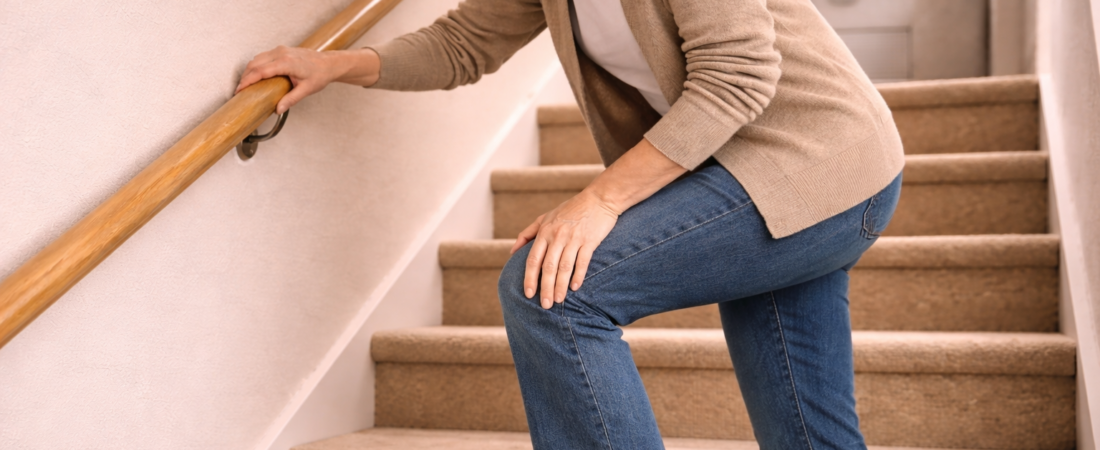
Knee pain on stairs from arthritis is often felt as stiffness, pressure, or a grinding sensation when climbing or descending.
Unlike sudden sharp pain, arthritis-related discomfort tends to feel gradual and persistent. Stairs can make it more noticeable because the joint bends deeply and carries more body weight.
This page focuses only on arthritis-related pain that appears specifically on stairs.
Why Stairs Increase Arthritis Discomfort
When climbing stairs, the knee joint compresses more than during flat walking. The cartilage surfaces press together more firmly, and the kneecap moves under load.
If cartilage is thinner or rougher due to arthritis, stair movement can feel:
• Stiff at the start
• Achy after several steps
• Tight around the kneecap
• More difficult when going up than across flat ground
Ascending stairs (going up) often requires stronger push-off from the front leg, which can increase pressure in the joint.
What It Usually Feels Like
Arthritis-related stair pain often feels:
• Dull and aching rather than sharp
• Worse after periods of rest
• Accompanied by morning stiffness
• Slightly improved after gentle movement
Some people notice mild swelling or a grinding sensation during bending.
When It May Progress
Occasional stiffness on stairs can be manageable. However, it may deserve attention if:
• Pain steadily increases
• The knee feels unstable on steps
• Swelling becomes consistent
• Stairs become increasingly difficult to manage
If you want to compare this with other stair-related patterns, review the broader overview of knee pain on stairs
What May Help
Small adjustments sometimes reduce stair strain:
• Use the handrail when going up
• Take one step at a time
• Lead with the less painful leg
• Move more slowly on descent
If discomfort persists or limits daily movement, further evaluation is commonly considered.
This page focuses specifically on arthritis-related discomfort that appears during stair use.