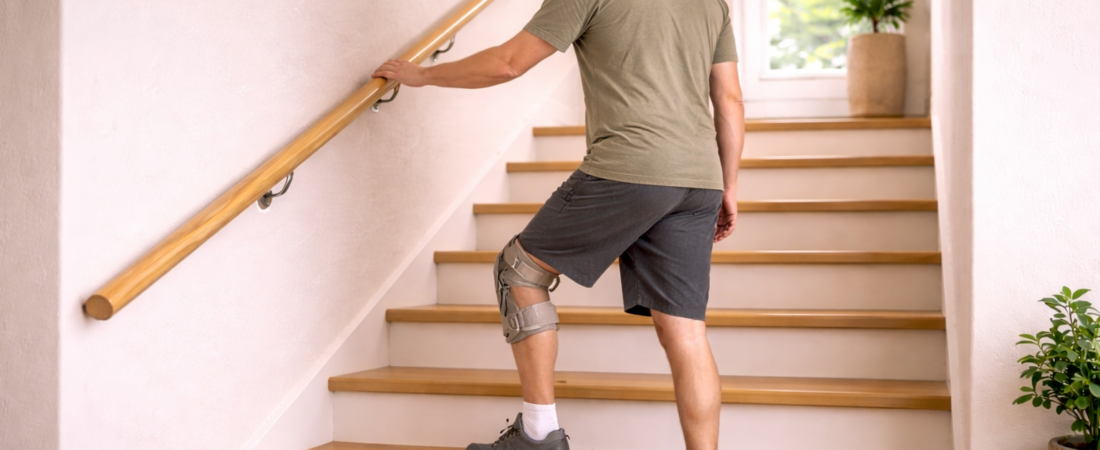
Some people explore knee braces when stair-related pain feels unstable, irritated, or repetitive. A brace does not fix the underlying cause, but it may provide added support or improve confidence during stair use.
This page focuses only on brace types commonly considered for stair discomfort.
Why Stairs Feel Less Stable
Climbing stairs requires:
• Strong knee extension
• Controlled bending
• Balance during weight transfer
• Stability under load
If the knee feels weak or sensitive during upward or downward steps, light external support may reduce strain.
Common Types of Braces
Compression Sleeves
Light, flexible sleeves provide gentle compression around the joint.
They may help with:
• Mild swelling
• Warmth around the knee
• General movement confidence
They do not provide strong structural support.
Hinged Knee Braces
These braces include side supports that guide movement.
They are sometimes considered when:
• The knee feels unstable
• There is side-to-side discomfort
• Support is needed during descent
They are more structured than compression sleeves.
Patellar Support Straps
These sit below the kneecap and apply light pressure to the tendon.
They are sometimes used when pain feels centered at the front of the knee during stair climbing.
Choosing a Brace for Stairs
When considering a brace for stair use:
• Ensure correct sizing
• Avoid overly tight compression
• Test comfort on a short staircase first
• Remove if it increases discomfort
If stair pain continues despite support, you may want to review When to See a Doctor for Knee Pain on Stairs
If you’re unsure what type of stair-related discomfort you’re experiencing, start with the overview of knee pain on stairs
This information is educational and not a substitute for professional medical advice.